
When you are auditing your annual consumable budget, it is easy to look at the raw cost per roll of labels and choose the cheapest line item. For many operation managers across Canada, that usually leads to a common debate: Direct Thermal vs. Thermal Transfer technology.
At a glance, going ribbonless seems like an instant win for your bottom line. However, calculating the true total cost of ownership requires looking past the initial cost of the roll. Environmental exposure, barcode scannability, and printhead longevity all play massive roles in your actual operational expenses.
Here is the technical breakdown of how these two technologies stack up, and how to choose the right substrate for your Canadian supply chain.
The Core Technology: How They Work
To understand the long-term cost differences, we have to look at how ink meets the material.
Direct Thermal (DT) Printing
Direct thermal printers use no ink, toner, or ribbon. Instead, the printhead applies heat directly to a chemically treated, heat-sensitive substrate. When the paper passes under the heated elements, it turns black, creating your text or barcode.
Thermal Transfer (TT) Printing
Thermal transfer printing uses a heated printhead to melt a wax or resin-based ink from a separate ribbon onto the label substrate. The ink is actually absorbed and bonded into the face sheet, creating a permanent image.
Shelf-Life
The biggest budget issue in warehouse management is deploying direct thermal labels in environments they weren’t engineered to handle.
Because direct thermal labels remain chemically active after printing, they are highly sensitive to UV light, heat, and chemical exposure.
- The Reality of DT: If your pallets sit under bright warehouse lighting, endure the summer heat in a distribution center, or are exposed to friction during transit, direct thermal labels will fade, yellow, or turn completely black. In most standard applications, DT labels become unstable or unreadable by scanners beyond 6 months.
- The TT Advantage: Thermal transfer printing produces crisp, high-definition, smudge-proof barcodes. By pairing the right ribbon (wax, wax-resin, or pure resin) with the right substrate (paper or synthetic poly), your labels become virtually impervious to scratching, moisture, extreme temperature fluctuations, and chemical contact.
If a shipment is rejected by a major retailer because a direct thermal barcode faded and became unscannable in transit, the chargeback fees and re-labeling labor will instantly wipe out any upfront savings on the label rolls.
Comparison: Direct Thermal vs Thermal Transfer
| Feature | Direct Thermal (DT) | Thermal Transfer (TT) |
| Ribbon Required? | No | Yes (Wax, Wax/Resin, or Resin) |
| Upfront Cost | Lower (No ribbon inventory needed) | Higher (Must purchase ribbons) |
| Image Longevity | Short-term (Typically under 6 months) | Permanent / Long-term |
| Resistance | Poor (Fades under UV, heat, and friction) | Excellent (Smudge, scratch, and chemical resistant) |
| Best Used For | Shipping labels, cross-docking, fresh grocery | Product tracking, asset tagging, outdoor storage |
Printhead Longevity
The most overlooked variable in the consumable budget is the hardware itself. Warehouse managers often assume that because direct thermal has fewer moving parts (no ribbon spindles), it is easier on the printer. The exact opposite is true.
In a direct thermal setup, the printhead is in direct, constant contact with the rough paper substrate. This continuous friction, combined with the high temperatures required to trigger the chemical paper, acts like micro-sandpaper on your equipment.
By contrast, thermal transfer printing uses a ribbon that acts as a protective smooth buffer between the printhead and the label material. The back-coating on high-quality ribbons is specifically engineered to reduce friction and static electricity. Furthermore, transferring ink from a ribbon typically requires lower printhead heat settings than activating direct thermal paper.
By switching to thermal transfer, you significantly reduce printhead wear and tear. This drastically extends the operational lifespan of your expensive Zebra, Honeywell, or Datamax printheads, components that can easily cost hundreds of dollars per replacement.
Direct Thermal vs. Thermal Transfer: The Verdict
To optimize your annual budget, map your selection directly to the label’s operational lifecycle:
Choose Direct Thermal If:
- You are printing standard shipping labels (e.g., Canada Post, FedEx, UPS) that only need to survive a 2-to-5 day transit window.
- The inventory moves through your facility in less than six months.
- The labels will remain indoors and will not be exposed to high heat, moisture, or heavy abrasion.
Choose Thermal Transfer If:
- Your items require long-term tracking, warehousing, or asset management beyond 6 months.
- Your pallets are subject to outdoor storage, cross-border transit, or variable climates.
- You are printing on synthetic materials (like polypropylene or polyester) for heavy-duty industrial environments.
- You want to minimize hardware downtime and maximize the lifespan of your printheads.
Don’t let upfront consumable costs dictate your strategy. Balancing the price of the roll against printhead replacement cycles and the risk of unreadable barcodes is the only true way to protect your warehouse budget.
Related Products

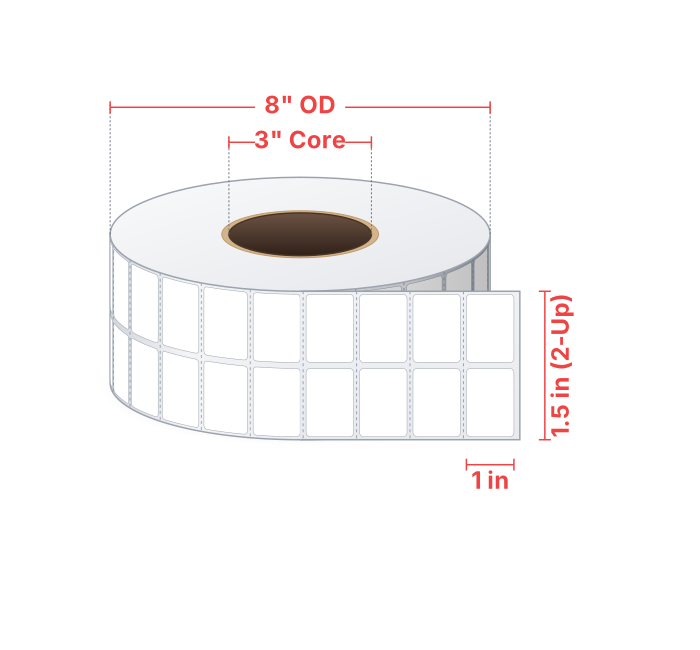
1.5″ x 1″ Thermal Transfer (9000 Labels / Roll, 8 Rolls / Case)
✓ In stock · Ships from the GTA$177.99 /case2.625″ x 1″ Laser Sheet Labels (30000 Labels / Case)
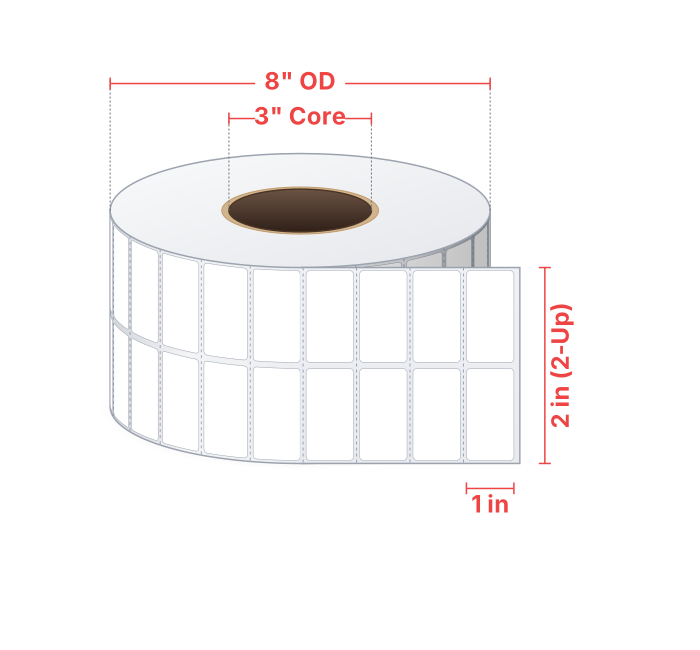
✓ In stock · Ships from the GTA$107.99 /case2″ x 1″ Thermal Transfer (9000 Labels / Roll, 4 Rolls / Case)
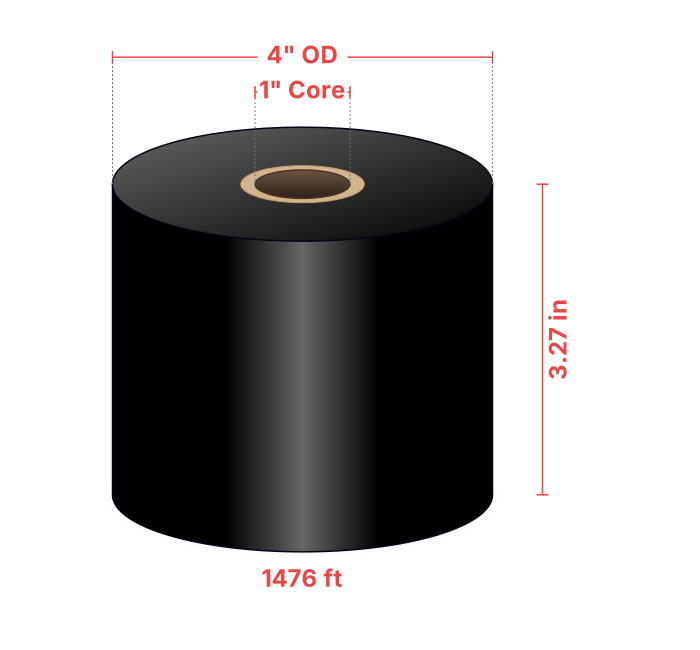
✓ In stock · Ships from the GTA$99.99 /case3.27″ x 1476ft Wax Ribbon (Zebra, 24 Ribbons / Case)
✓ In stock · Ships from the GTA$223.99 /case